To contact us Click HERE
It's a hell of a way to open up a blog post, you think? Blaming Thomas Jefferson for everything?
Well, not everything. But still...
We're up to the example of Presidential Character for the Active-Positive types. The one word to describe this type is Adaptive: these are the guys who enjoy not just the perks of being the President but also the duties, self-deprecating but also self-confident, self-starters who seek accomplishments and problems to solve before anyone else even realizes there's a problem, and someone willing to compromise with others in politics to get things done.
The perfect example of Jefferson's adaptive style was the biggest event during his tenure: the Louisiana Purchase. By Jefferson's administration France fell under the rule of Napoleon Bonaparte, and during his reign building up to Emperor Napoleon had negotiated Spain - then a vassal state under his brother's rule - to hand over the Louisiana Territory that took up the middle third of the North American continent. His intent was an overseas empire combined with French holdings in the Caribbean. However, ongoing disasters with Haiti including a slave uprising discouraged Napoleon to where he decided against keeping it. At the same time, Jefferson had sent envoys to France to negotiate either a lease or the purchase of the City of New Orleans, the key trading port of the Mississippi River. Jefferson feared that if Napoleon secured Louisiana, he could tie up a major waterway route for the western edge of where the United States then reached.
Instead of negotiating over New Orleans, Napoleon offered up all of the Louisiana Territory. For $15 million. Even in that time, this was effing dirt-cheap (roughly 3 cents for every acre) and essentially the biggest land deal of the millennium (well, for the U.S. For the native tribes already living in the Territory, they never saw one red cent). Napoleon either didn't know the value of land, or simply wanted to get rid of what he then saw as useless (he also probably sought to buy off American neutrality as his war against Britain was kicking into high gear again).
This quickly became a major dilemma for Jefferson, for two reasons: One, he simply wasn't prepared for such a major land-mass addition to the nation's frontier; two, there wasn't any rule for this anywhere in the Constitution.
I need to back up a bit and note how Jefferson was the leader, the banner carrier of the Democratic-Republican Party. Unlike the Federalists who used a loose interpretation of the Constitution to establish laws and precedence, the Democrats believed in strict interpretation of the Constitution, including the limitations of powers on the Executive and ensuring the states had rights nearly comparable to the federal government. Jefferson's original view of government was opposed to a strong Federal system.
But now here was something challenging that view. He may have had power to conduct treaties and leasing arrangements, but there was no authority in the Constitution to make a land purchase from a foreign nation of this size. Jefferson could have gone to Congress, explained the deal Napoleon was offering, and wait for Congress to give him the political authority via amendment to get the deal done. But that meant working with a Congress that could bicker over every detail, delaying what was clearly an impulse buy: Napoleon could well change his mind within another week or month waiting for something to happen and kill the offer.
So Jefferson did what any Active-Positive would do: he broke his own rules. He authorized the purchase without first securing Constitutional authority to do so, pressing Congress to get the funds lined up as quick as possible.
And so, thanks to Jefferson's A-P attitudes, we went from being a decent-sized nation made up of states into an expanding pre-formed empire with enough territory to double in size and to equal the same land-mass as most of Europe. Before this, no one had any notion of Manifest Destiny: the Pacific Coast seemed so far off. After this, reaching the Pacific was now a genuine possibility (and the Lewis and Clark Corps of Discovery proved it, although their original intent to find a Northwest Passage water route didn't pan out). And now all of a sudden the issue of slavery, which was confined to southern states and territories and could have moved no further than the Mississippi, became a bigger hot potato... underlying the passions under the colonization of Texas by southerners, leading to their rebellion against Mexico... leading to Texas annexation into the U.S. and soon after stirring up the Mexican-American War, solidifying our nation's reach between two oceans... adding even more territory that slave-owners sought to acquire for their ever-growing reliance on slave labor economics.
This kinda needs to be pointed out that Active-Positive Presidents are NOT always good things, no matter how... positive... the wording seems. A-Ps are active and very aggressive with their powers... and while they resolve a lot of challenges they never take into consideration the consequences of their actions (political axiom: Every political action generates an unequal and disproportionate reaction (pa < dpr) ). In short, they are quick to act, but fail to plan ahead (Active-Negatives tend to at least put more thought into what they're doing).
Another example is Jefferson's attempt to engage Great Britain for transgressions during the Napoleonic Wars. The United States tried to remain neutral but England kept impressing - raiding American ships and taking crewmen the British claimed were deserters - to the point of the Chesapeake-Leopard Affair. Rather than pursue the threat of war - Jefferson knew as his predecessors did that the U.S. was in no condition for war - Jefferson tried instead a series of embargoes blocking off all trade with Great Britain. He figured that the lost trade would hurt England enough to force them to terms. He failed to figure that the American traders would also get hurt in the process - and that England had other trade partners and colonial holdings to keep them stocked with supplies. The embargoes failed quickly and spectacularly, causing major rifts across the U.S., and Jefferson ended his term of office repealing those acts before they caused more damage.
Jefferson's two terms of office were very active indeed, more than the administrations of the first two Presidents Washington and Adams. But a lot of those actions had unintended consequences, which led to things like the War of 1812, the march of Manifest Destiny - which Natives, Mexicans, and even Americans would come to loath - and the increasing debate over slavery. Whether or not Jefferson's actions were good, the positive aspects of his actions are obvious... and the negative aspects are obvious as well. The debates will not end here. Not until much later...
25 Şubat 2013 Pazartesi

What Is Needed To Fix Florida's (and the Nation's) Voting Woes
To contact us Click HERE
The finger-pointing and arguing over the debacle that was the 2012 elections process - hundreds of thousands discouraged from voting due to long lines, those long lines due to ballots being 4-12 pages long (!) - has begun in earnest, but instead of finger-pointing we need to - as a state and as a nation - make these very important reforms to ease voter access and improve voter rights.
1) We need to get ALL eligible people who can vote registered to vote.
2) We need to make it easier for people to vote, period. That means giving them the ability to vote wherever they can on election day or during pre-election early voting days. People get confused by being required to vote by precinct or specific location which sometimes are miles away while a perfectly good precinct is right down the block, and some people have moved since their last registered address and trying to vote from a new address. Same-Day voter registration updating the voter's proper address to allow them to vote right away. Creating a uniform balloting system that identifies the voter's district needs and prints (or electronically displays) the proper ballot - something elections offices here in Florida can do during Early Voting polling - can reduce the need to vote at a specific (and oft-times overwhelmed) precinct: just think of all those voting lines in Dade County that could have been eased by sending voters to nearby polling places that weren't overwhelmed.
3) We need to drop the ban on ex-felons denied the right to vote, and forcing them to re-register to get their right to vote restored. This should be an automatic thing: they've legally paid their debt to society, once out of prison the ex-felon should have the right to act like a citizen again as part of their probationary/ rehabilitative process. Having the ex-felons jump through years' worth of bureaucratic hoops is insulting.
4) We need to drop gerrymandering. Gerrymandering literally wastes people's votes.
5) A Photo ID for voting actually does make sense, alongside the signature requirement when showing up to vote. But the states need to issue such photo IDs at no cost: voting needs to be free in every way possible.
6) We need to have more Early Voting days, not fewer.
7) We need to move Election Day from a Tuesday - the middle of a workweek - to a weekend day like Friday or Saturday or Sunday. AND make the Election Day a national holiday. Back in the old days when voting was done at the county seat and people had to travel by horse or foot, it may have made sense to have elections on a workday when people would be at the county seat on other business. But not anymore. We need to make sure people can get to vote, and making the Big Election a banking/school holiday nearest to the weekend frees up a ton of people to give them all day to get out the vote.
8) We need to include a None Of The Above option for every candidate. It will get messy but if all candidates for an elected office are just disgusting human beings, the voters should have the right to say No to the offal the parties are shoving at them. It should make the parties' more responsive (maybe).
Any other suggestions?
1) We need to get ALL eligible people who can vote registered to vote.
2) We need to make it easier for people to vote, period. That means giving them the ability to vote wherever they can on election day or during pre-election early voting days. People get confused by being required to vote by precinct or specific location which sometimes are miles away while a perfectly good precinct is right down the block, and some people have moved since their last registered address and trying to vote from a new address. Same-Day voter registration updating the voter's proper address to allow them to vote right away. Creating a uniform balloting system that identifies the voter's district needs and prints (or electronically displays) the proper ballot - something elections offices here in Florida can do during Early Voting polling - can reduce the need to vote at a specific (and oft-times overwhelmed) precinct: just think of all those voting lines in Dade County that could have been eased by sending voters to nearby polling places that weren't overwhelmed.
3) We need to drop the ban on ex-felons denied the right to vote, and forcing them to re-register to get their right to vote restored. This should be an automatic thing: they've legally paid their debt to society, once out of prison the ex-felon should have the right to act like a citizen again as part of their probationary/ rehabilitative process. Having the ex-felons jump through years' worth of bureaucratic hoops is insulting.
4) We need to drop gerrymandering. Gerrymandering literally wastes people's votes.
5) A Photo ID for voting actually does make sense, alongside the signature requirement when showing up to vote. But the states need to issue such photo IDs at no cost: voting needs to be free in every way possible.
6) We need to have more Early Voting days, not fewer.
7) We need to move Election Day from a Tuesday - the middle of a workweek - to a weekend day like Friday or Saturday or Sunday. AND make the Election Day a national holiday. Back in the old days when voting was done at the county seat and people had to travel by horse or foot, it may have made sense to have elections on a workday when people would be at the county seat on other business. But not anymore. We need to make sure people can get to vote, and making the Big Election a banking/school holiday nearest to the weekend frees up a ton of people to give them all day to get out the vote.
8) We need to include a None Of The Above option for every candidate. It will get messy but if all candidates for an elected office are just disgusting human beings, the voters should have the right to say No to the offal the parties are shoving at them. It should make the parties' more responsive (maybe).
Any other suggestions?
Wouldn't You Know It, the Busiest Weekend of My Life...
To contact us Click HERE
...and I miss out on the huge news of the Pope resigning to make way for a hyperspace bypass to make way for yet another groomed arch-conservative Cardinal who's going to use the Second Vatican Council decisions as toilet paper. Maybe...
How much of this is due to the declining health of Benedict XVI - and how much is due to the fact that as Cardinal Ratzinger he presided over the investigations of hundreds of increasingly public revelations of pedophile behavior of priests some of which remained under wraps in defiance of other law enforcement agencies' attempts to bring about charges - remains to be seen. In truth, the Pope wasn't a young man when he took the office back in 2005 anyway: also in truth, it's hurting the Church's claim to moral certainty when they've been implicated in massive cover-ups and allowances of child rape to continue even after the pedophile priests were identified and confirmed, and that the current Pope for good or ill had a hand in the internal affairs.
The Church will hold its Papal conclave by the end of the month. If they can find a Pope willing to confront the truth of the sexual abuse, and willing to recognize that certain traditions that allow pedophiles to flourish in their organiztion need to pass on, then best of luck and God Bless. But Benedict and his predecessor Pope John Paul II spent a lot of decades purging out the more liberal bishops and cardinals, leaving the more conservative (and the ones less likely to accept reform) as likely Popes. And this sexual abuse mess has reached every corner of their institution... finding a bishop or cardinal free of the taint would be truly a stroke of God's Blessing...
P.S. Is this gonna screw up stuff like Ash Wednesday or anything?
How much of this is due to the declining health of Benedict XVI - and how much is due to the fact that as Cardinal Ratzinger he presided over the investigations of hundreds of increasingly public revelations of pedophile behavior of priests some of which remained under wraps in defiance of other law enforcement agencies' attempts to bring about charges - remains to be seen. In truth, the Pope wasn't a young man when he took the office back in 2005 anyway: also in truth, it's hurting the Church's claim to moral certainty when they've been implicated in massive cover-ups and allowances of child rape to continue even after the pedophile priests were identified and confirmed, and that the current Pope for good or ill had a hand in the internal affairs.
The Church will hold its Papal conclave by the end of the month. If they can find a Pope willing to confront the truth of the sexual abuse, and willing to recognize that certain traditions that allow pedophiles to flourish in their organiztion need to pass on, then best of luck and God Bless. But Benedict and his predecessor Pope John Paul II spent a lot of decades purging out the more liberal bishops and cardinals, leaving the more conservative (and the ones less likely to accept reform) as likely Popes. And this sexual abuse mess has reached every corner of their institution... finding a bishop or cardinal free of the taint would be truly a stroke of God's Blessing...
P.S. Is this gonna screw up stuff like Ash Wednesday or anything?
The Bhagavad Gita's Primary Message
To contact us Click HERE
Welcome back, fans of Latin and Greek root words as they pertain to English vocabulary! I and my colleagues in Portland, OR have just finished putting out our SAT and GRE vocabulary online learning system that has been a labor of love. Hence, I have a few moments to discuss yet another amazing text that I've just perused, The Bhagavad Gita as translated by Eknath Easwaran. This Hindu/Yoga text, probably the most enlightening religious text I have yet to learn from, has one primary message in it that supersedes all others: The Freedom That Comes from Renunciation. Let's first take a quick look at the Latin roots of the word "renunciation:"
re-: from the Latin root "re" meaning "back, again."
nunciat: from the Latin root word nuntio, nuntiare, nuntiavi, nuntiatus: "announce, report, send a message." Thus, renunciation is the taking in of something, and sending it back out into the world, or not acquiring the desire for the "message" you want in the first place. SAT and GRE English vocabulary words that come from this root include: renounce, denounce, denunciation, enunciatem and annunciation.
The freedom that comes from renunciation is a simple concept, and it works like this. In chapter two of the Bhagavad Gita, we find the following verse:
You have the right to work, but never to the
fruit of work. You should never engage in action
for the sake of reward, nor should you long for
inaction.
This, to me, is almost the meaning of life itself. Imagine that, if you were to do work with no selfish thoughts of what you were going to get out of it; that is, you renounce all results of the work, all that which you hope to gain from the work, such as material success, power, wealth, etc. This would bring about a state of moksha, or freedom. One would never have to worry again, scheme again, be disappointed again when things didn't work out.
In point of fact, Krishna, the Lord of Yoga in The Bhagavad Gita, tells Arjuna, his disciple, that those who do not desire or hanker for the fruit of their actions, the desired results, attain spiritual perfection, and in fact get everything they want. Whereas those who strive and think only about what's in it for them gain, in the end, nothing but disappointment. This renunciation of the fruit of action (note this is not giving up the action itself!) is, in Sanskrit, tyaga. Imagine working selflessly. And thereby freeing yourself from the bondage and pain that comes from lack of success (or sometimes even from success itself, which often brings about unintended entanglements in the swirling mass that is maya).
Namaste.
Interested in learning SAT or GRE English vocabulary that is taught to you so that you won't forget it? Is that even possible? It is through a fabulous Adaptive Memory Engine that is only available at membean.com. Try it out for free ... you won't be sorry. And it's fun! Or, if your more into learning the Greek and Latin root words of English, check out www.wordempire.com for the most comprehensive Greek and Latin roots dictionary available today.
re-: from the Latin root "re" meaning "back, again."
nunciat: from the Latin root word nuntio, nuntiare, nuntiavi, nuntiatus: "announce, report, send a message." Thus, renunciation is the taking in of something, and sending it back out into the world, or not acquiring the desire for the "message" you want in the first place. SAT and GRE English vocabulary words that come from this root include: renounce, denounce, denunciation, enunciatem and annunciation.
The freedom that comes from renunciation is a simple concept, and it works like this. In chapter two of the Bhagavad Gita, we find the following verse:
You have the right to work, but never to the
fruit of work. You should never engage in action
for the sake of reward, nor should you long for
inaction.
This, to me, is almost the meaning of life itself. Imagine that, if you were to do work with no selfish thoughts of what you were going to get out of it; that is, you renounce all results of the work, all that which you hope to gain from the work, such as material success, power, wealth, etc. This would bring about a state of moksha, or freedom. One would never have to worry again, scheme again, be disappointed again when things didn't work out.
In point of fact, Krishna, the Lord of Yoga in The Bhagavad Gita, tells Arjuna, his disciple, that those who do not desire or hanker for the fruit of their actions, the desired results, attain spiritual perfection, and in fact get everything they want. Whereas those who strive and think only about what's in it for them gain, in the end, nothing but disappointment. This renunciation of the fruit of action (note this is not giving up the action itself!) is, in Sanskrit, tyaga. Imagine working selflessly. And thereby freeing yourself from the bondage and pain that comes from lack of success (or sometimes even from success itself, which often brings about unintended entanglements in the swirling mass that is maya).
Namaste.
Interested in learning SAT or GRE English vocabulary that is taught to you so that you won't forget it? Is that even possible? It is through a fabulous Adaptive Memory Engine that is only available at membean.com. Try it out for free ... you won't be sorry. And it's fun! Or, if your more into learning the Greek and Latin root words of English, check out www.wordempire.com for the most comprehensive Greek and Latin roots dictionary available today.
Some thoughts on “cybersecurity” professionalization and education
To contact us Click HERE
Some thoughts on “cybersecurity” professionalization and education |

| Some thoughts on “cybersecurity” professionalization and education Posted: 23 Feb 2013 11:03 AM PST |
| You are subscribed to email updates from CERIAS Combined Feed To stop receiving these emails, you may unsubscribe now. | Email delivery powered by Google |
| Google Inc., 20 West Kinzie, Chicago IL USA 60610 | |
24 Şubat 2013 Pazar
Presidential Character: Week Three, It's All Jefferson's Fault
To contact us Click HERE
It's a hell of a way to open up a blog post, you think? Blaming Thomas Jefferson for everything?
Well, not everything. But still...
We're up to the example of Presidential Character for the Active-Positive types. The one word to describe this type is Adaptive: these are the guys who enjoy not just the perks of being the President but also the duties, self-deprecating but also self-confident, self-starters who seek accomplishments and problems to solve before anyone else even realizes there's a problem, and someone willing to compromise with others in politics to get things done.
The perfect example of Jefferson's adaptive style was the biggest event during his tenure: the Louisiana Purchase. By Jefferson's administration France fell under the rule of Napoleon Bonaparte, and during his reign building up to Emperor Napoleon had negotiated Spain - then a vassal state under his brother's rule - to hand over the Louisiana Territory that took up the middle third of the North American continent. His intent was an overseas empire combined with French holdings in the Caribbean. However, ongoing disasters with Haiti including a slave uprising discouraged Napoleon to where he decided against keeping it. At the same time, Jefferson had sent envoys to France to negotiate either a lease or the purchase of the City of New Orleans, the key trading port of the Mississippi River. Jefferson feared that if Napoleon secured Louisiana, he could tie up a major waterway route for the western edge of where the United States then reached.
Instead of negotiating over New Orleans, Napoleon offered up all of the Louisiana Territory. For $15 million. Even in that time, this was effing dirt-cheap (roughly 3 cents for every acre) and essentially the biggest land deal of the millennium (well, for the U.S. For the native tribes already living in the Territory, they never saw one red cent). Napoleon either didn't know the value of land, or simply wanted to get rid of what he then saw as useless (he also probably sought to buy off American neutrality as his war against Britain was kicking into high gear again).
This quickly became a major dilemma for Jefferson, for two reasons: One, he simply wasn't prepared for such a major land-mass addition to the nation's frontier; two, there wasn't any rule for this anywhere in the Constitution.
I need to back up a bit and note how Jefferson was the leader, the banner carrier of the Democratic-Republican Party. Unlike the Federalists who used a loose interpretation of the Constitution to establish laws and precedence, the Democrats believed in strict interpretation of the Constitution, including the limitations of powers on the Executive and ensuring the states had rights nearly comparable to the federal government. Jefferson's original view of government was opposed to a strong Federal system.
But now here was something challenging that view. He may have had power to conduct treaties and leasing arrangements, but there was no authority in the Constitution to make a land purchase from a foreign nation of this size. Jefferson could have gone to Congress, explained the deal Napoleon was offering, and wait for Congress to give him the political authority via amendment to get the deal done. But that meant working with a Congress that could bicker over every detail, delaying what was clearly an impulse buy: Napoleon could well change his mind within another week or month waiting for something to happen and kill the offer.
So Jefferson did what any Active-Positive would do: he broke his own rules. He authorized the purchase without first securing Constitutional authority to do so, pressing Congress to get the funds lined up as quick as possible.
And so, thanks to Jefferson's A-P attitudes, we went from being a decent-sized nation made up of states into an expanding pre-formed empire with enough territory to double in size and to equal the same land-mass as most of Europe. Before this, no one had any notion of Manifest Destiny: the Pacific Coast seemed so far off. After this, reaching the Pacific was now a genuine possibility (and the Lewis and Clark Corps of Discovery proved it, although their original intent to find a Northwest Passage water route didn't pan out). And now all of a sudden the issue of slavery, which was confined to southern states and territories and could have moved no further than the Mississippi, became a bigger hot potato... underlying the passions under the colonization of Texas by southerners, leading to their rebellion against Mexico... leading to Texas annexation into the U.S. and soon after stirring up the Mexican-American War, solidifying our nation's reach between two oceans... adding even more territory that slave-owners sought to acquire for their ever-growing reliance on slave labor economics.
This kinda needs to be pointed out that Active-Positive Presidents are NOT always good things, no matter how... positive... the wording seems. A-Ps are active and very aggressive with their powers... and while they resolve a lot of challenges they never take into consideration the consequences of their actions (political axiom: Every political action generates an unequal and disproportionate reaction (pa < dpr) ). In short, they are quick to act, but fail to plan ahead (Active-Negatives tend to at least put more thought into what they're doing).
Another example is Jefferson's attempt to engage Great Britain for transgressions during the Napoleonic Wars. The United States tried to remain neutral but England kept impressing - raiding American ships and taking crewmen the British claimed were deserters - to the point of the Chesapeake-Leopard Affair. Rather than pursue the threat of war - Jefferson knew as his predecessors did that the U.S. was in no condition for war - Jefferson tried instead a series of embargoes blocking off all trade with Great Britain. He figured that the lost trade would hurt England enough to force them to terms. He failed to figure that the American traders would also get hurt in the process - and that England had other trade partners and colonial holdings to keep them stocked with supplies. The embargoes failed quickly and spectacularly, causing major rifts across the U.S., and Jefferson ended his term of office repealing those acts before they caused more damage.
Jefferson's two terms of office were very active indeed, more than the administrations of the first two Presidents Washington and Adams. But a lot of those actions had unintended consequences, which led to things like the War of 1812, the march of Manifest Destiny - which Natives, Mexicans, and even Americans would come to loath - and the increasing debate over slavery. Whether or not Jefferson's actions were good, the positive aspects of his actions are obvious... and the negative aspects are obvious as well. The debates will not end here. Not until much later...
Well, not everything. But still...
We're up to the example of Presidential Character for the Active-Positive types. The one word to describe this type is Adaptive: these are the guys who enjoy not just the perks of being the President but also the duties, self-deprecating but also self-confident, self-starters who seek accomplishments and problems to solve before anyone else even realizes there's a problem, and someone willing to compromise with others in politics to get things done.
The perfect example of Jefferson's adaptive style was the biggest event during his tenure: the Louisiana Purchase. By Jefferson's administration France fell under the rule of Napoleon Bonaparte, and during his reign building up to Emperor Napoleon had negotiated Spain - then a vassal state under his brother's rule - to hand over the Louisiana Territory that took up the middle third of the North American continent. His intent was an overseas empire combined with French holdings in the Caribbean. However, ongoing disasters with Haiti including a slave uprising discouraged Napoleon to where he decided against keeping it. At the same time, Jefferson had sent envoys to France to negotiate either a lease or the purchase of the City of New Orleans, the key trading port of the Mississippi River. Jefferson feared that if Napoleon secured Louisiana, he could tie up a major waterway route for the western edge of where the United States then reached.
Instead of negotiating over New Orleans, Napoleon offered up all of the Louisiana Territory. For $15 million. Even in that time, this was effing dirt-cheap (roughly 3 cents for every acre) and essentially the biggest land deal of the millennium (well, for the U.S. For the native tribes already living in the Territory, they never saw one red cent). Napoleon either didn't know the value of land, or simply wanted to get rid of what he then saw as useless (he also probably sought to buy off American neutrality as his war against Britain was kicking into high gear again).
This quickly became a major dilemma for Jefferson, for two reasons: One, he simply wasn't prepared for such a major land-mass addition to the nation's frontier; two, there wasn't any rule for this anywhere in the Constitution.
I need to back up a bit and note how Jefferson was the leader, the banner carrier of the Democratic-Republican Party. Unlike the Federalists who used a loose interpretation of the Constitution to establish laws and precedence, the Democrats believed in strict interpretation of the Constitution, including the limitations of powers on the Executive and ensuring the states had rights nearly comparable to the federal government. Jefferson's original view of government was opposed to a strong Federal system.
But now here was something challenging that view. He may have had power to conduct treaties and leasing arrangements, but there was no authority in the Constitution to make a land purchase from a foreign nation of this size. Jefferson could have gone to Congress, explained the deal Napoleon was offering, and wait for Congress to give him the political authority via amendment to get the deal done. But that meant working with a Congress that could bicker over every detail, delaying what was clearly an impulse buy: Napoleon could well change his mind within another week or month waiting for something to happen and kill the offer.
So Jefferson did what any Active-Positive would do: he broke his own rules. He authorized the purchase without first securing Constitutional authority to do so, pressing Congress to get the funds lined up as quick as possible.
And so, thanks to Jefferson's A-P attitudes, we went from being a decent-sized nation made up of states into an expanding pre-formed empire with enough territory to double in size and to equal the same land-mass as most of Europe. Before this, no one had any notion of Manifest Destiny: the Pacific Coast seemed so far off. After this, reaching the Pacific was now a genuine possibility (and the Lewis and Clark Corps of Discovery proved it, although their original intent to find a Northwest Passage water route didn't pan out). And now all of a sudden the issue of slavery, which was confined to southern states and territories and could have moved no further than the Mississippi, became a bigger hot potato... underlying the passions under the colonization of Texas by southerners, leading to their rebellion against Mexico... leading to Texas annexation into the U.S. and soon after stirring up the Mexican-American War, solidifying our nation's reach between two oceans... adding even more territory that slave-owners sought to acquire for their ever-growing reliance on slave labor economics.
This kinda needs to be pointed out that Active-Positive Presidents are NOT always good things, no matter how... positive... the wording seems. A-Ps are active and very aggressive with their powers... and while they resolve a lot of challenges they never take into consideration the consequences of their actions (political axiom: Every political action generates an unequal and disproportionate reaction (pa < dpr) ). In short, they are quick to act, but fail to plan ahead (Active-Negatives tend to at least put more thought into what they're doing).
Another example is Jefferson's attempt to engage Great Britain for transgressions during the Napoleonic Wars. The United States tried to remain neutral but England kept impressing - raiding American ships and taking crewmen the British claimed were deserters - to the point of the Chesapeake-Leopard Affair. Rather than pursue the threat of war - Jefferson knew as his predecessors did that the U.S. was in no condition for war - Jefferson tried instead a series of embargoes blocking off all trade with Great Britain. He figured that the lost trade would hurt England enough to force them to terms. He failed to figure that the American traders would also get hurt in the process - and that England had other trade partners and colonial holdings to keep them stocked with supplies. The embargoes failed quickly and spectacularly, causing major rifts across the U.S., and Jefferson ended his term of office repealing those acts before they caused more damage.
Jefferson's two terms of office were very active indeed, more than the administrations of the first two Presidents Washington and Adams. But a lot of those actions had unintended consequences, which led to things like the War of 1812, the march of Manifest Destiny - which Natives, Mexicans, and even Americans would come to loath - and the increasing debate over slavery. Whether or not Jefferson's actions were good, the positive aspects of his actions are obvious... and the negative aspects are obvious as well. The debates will not end here. Not until much later...
What Is Needed To Fix Florida's (and the Nation's) Voting Woes
To contact us Click HERE
The finger-pointing and arguing over the debacle that was the 2012 elections process - hundreds of thousands discouraged from voting due to long lines, those long lines due to ballots being 4-12 pages long (!) - has begun in earnest, but instead of finger-pointing we need to - as a state and as a nation - make these very important reforms to ease voter access and improve voter rights.
1) We need to get ALL eligible people who can vote registered to vote.
2) We need to make it easier for people to vote, period. That means giving them the ability to vote wherever they can on election day or during pre-election early voting days. People get confused by being required to vote by precinct or specific location which sometimes are miles away while a perfectly good precinct is right down the block, and some people have moved since their last registered address and trying to vote from a new address. Same-Day voter registration updating the voter's proper address to allow them to vote right away. Creating a uniform balloting system that identifies the voter's district needs and prints (or electronically displays) the proper ballot - something elections offices here in Florida can do during Early Voting polling - can reduce the need to vote at a specific (and oft-times overwhelmed) precinct: just think of all those voting lines in Dade County that could have been eased by sending voters to nearby polling places that weren't overwhelmed.
3) We need to drop the ban on ex-felons denied the right to vote, and forcing them to re-register to get their right to vote restored. This should be an automatic thing: they've legally paid their debt to society, once out of prison the ex-felon should have the right to act like a citizen again as part of their probationary/ rehabilitative process. Having the ex-felons jump through years' worth of bureaucratic hoops is insulting.
4) We need to drop gerrymandering. Gerrymandering literally wastes people's votes.
5) A Photo ID for voting actually does make sense, alongside the signature requirement when showing up to vote. But the states need to issue such photo IDs at no cost: voting needs to be free in every way possible.
6) We need to have more Early Voting days, not fewer.
7) We need to move Election Day from a Tuesday - the middle of a workweek - to a weekend day like Friday or Saturday or Sunday. AND make the Election Day a national holiday. Back in the old days when voting was done at the county seat and people had to travel by horse or foot, it may have made sense to have elections on a workday when people would be at the county seat on other business. But not anymore. We need to make sure people can get to vote, and making the Big Election a banking/school holiday nearest to the weekend frees up a ton of people to give them all day to get out the vote.
8) We need to include a None Of The Above option for every candidate. It will get messy but if all candidates for an elected office are just disgusting human beings, the voters should have the right to say No to the offal the parties are shoving at them. It should make the parties' more responsive (maybe).
Any other suggestions?
1) We need to get ALL eligible people who can vote registered to vote.
2) We need to make it easier for people to vote, period. That means giving them the ability to vote wherever they can on election day or during pre-election early voting days. People get confused by being required to vote by precinct or specific location which sometimes are miles away while a perfectly good precinct is right down the block, and some people have moved since their last registered address and trying to vote from a new address. Same-Day voter registration updating the voter's proper address to allow them to vote right away. Creating a uniform balloting system that identifies the voter's district needs and prints (or electronically displays) the proper ballot - something elections offices here in Florida can do during Early Voting polling - can reduce the need to vote at a specific (and oft-times overwhelmed) precinct: just think of all those voting lines in Dade County that could have been eased by sending voters to nearby polling places that weren't overwhelmed.
3) We need to drop the ban on ex-felons denied the right to vote, and forcing them to re-register to get their right to vote restored. This should be an automatic thing: they've legally paid their debt to society, once out of prison the ex-felon should have the right to act like a citizen again as part of their probationary/ rehabilitative process. Having the ex-felons jump through years' worth of bureaucratic hoops is insulting.
4) We need to drop gerrymandering. Gerrymandering literally wastes people's votes.
5) A Photo ID for voting actually does make sense, alongside the signature requirement when showing up to vote. But the states need to issue such photo IDs at no cost: voting needs to be free in every way possible.
6) We need to have more Early Voting days, not fewer.
7) We need to move Election Day from a Tuesday - the middle of a workweek - to a weekend day like Friday or Saturday or Sunday. AND make the Election Day a national holiday. Back in the old days when voting was done at the county seat and people had to travel by horse or foot, it may have made sense to have elections on a workday when people would be at the county seat on other business. But not anymore. We need to make sure people can get to vote, and making the Big Election a banking/school holiday nearest to the weekend frees up a ton of people to give them all day to get out the vote.
8) We need to include a None Of The Above option for every candidate. It will get messy but if all candidates for an elected office are just disgusting human beings, the voters should have the right to say No to the offal the parties are shoving at them. It should make the parties' more responsive (maybe).
Any other suggestions?
Wouldn't You Know It, the Busiest Weekend of My Life...
To contact us Click HERE
...and I miss out on the huge news of the Pope resigning to make way for a hyperspace bypass to make way for yet another groomed arch-conservative Cardinal who's going to use the Second Vatican Council decisions as toilet paper. Maybe...
How much of this is due to the declining health of Benedict XVI - and how much is due to the fact that as Cardinal Ratzinger he presided over the investigations of hundreds of increasingly public revelations of pedophile behavior of priests some of which remained under wraps in defiance of other law enforcement agencies' attempts to bring about charges - remains to be seen. In truth, the Pope wasn't a young man when he took the office back in 2005 anyway: also in truth, it's hurting the Church's claim to moral certainty when they've been implicated in massive cover-ups and allowances of child rape to continue even after the pedophile priests were identified and confirmed, and that the current Pope for good or ill had a hand in the internal affairs.
The Church will hold its Papal conclave by the end of the month. If they can find a Pope willing to confront the truth of the sexual abuse, and willing to recognize that certain traditions that allow pedophiles to flourish in their organiztion need to pass on, then best of luck and God Bless. But Benedict and his predecessor Pope John Paul II spent a lot of decades purging out the more liberal bishops and cardinals, leaving the more conservative (and the ones less likely to accept reform) as likely Popes. And this sexual abuse mess has reached every corner of their institution... finding a bishop or cardinal free of the taint would be truly a stroke of God's Blessing...
P.S. Is this gonna screw up stuff like Ash Wednesday or anything?
How much of this is due to the declining health of Benedict XVI - and how much is due to the fact that as Cardinal Ratzinger he presided over the investigations of hundreds of increasingly public revelations of pedophile behavior of priests some of which remained under wraps in defiance of other law enforcement agencies' attempts to bring about charges - remains to be seen. In truth, the Pope wasn't a young man when he took the office back in 2005 anyway: also in truth, it's hurting the Church's claim to moral certainty when they've been implicated in massive cover-ups and allowances of child rape to continue even after the pedophile priests were identified and confirmed, and that the current Pope for good or ill had a hand in the internal affairs.
The Church will hold its Papal conclave by the end of the month. If they can find a Pope willing to confront the truth of the sexual abuse, and willing to recognize that certain traditions that allow pedophiles to flourish in their organiztion need to pass on, then best of luck and God Bless. But Benedict and his predecessor Pope John Paul II spent a lot of decades purging out the more liberal bishops and cardinals, leaving the more conservative (and the ones less likely to accept reform) as likely Popes. And this sexual abuse mess has reached every corner of their institution... finding a bishop or cardinal free of the taint would be truly a stroke of God's Blessing...
P.S. Is this gonna screw up stuff like Ash Wednesday or anything?
Presidential Character: Week Eight, Tough Act to Follow
To contact us Click HERE
So what kind of President was Martin Van Buren?
An unlucky one, by all measures.
Going off on a tangent here. But about the reason why Presidents should be thankful they're capped to just two terms of office. Eight years is enough time to do the work you wanted to do when you became President... and usually just right at the time you need to clear out of the Oval Office before the consequences of all the things you've done as President come due.
If a President is lucky enough to get a second term, most often than not they live to regret it: a quick check of Two-Termers find a lot of scandals and bad breaks happening in a second term. Washington, Jefferson, Madison (the War of 1812 was in his second term), Jackson (the Nullification Crisis), Grant (getting a little ahead of ourselves here, but yeah), Cleveland (the non-consecutive counts), McKinley, Wilson, FDR's second term wasn't a hoot, Truman, Eisenhower, LBJ, Nixon, Reagan, Clinton, Bush the Lesser... yeah, second terms were a bit of downers for those guys. We don't know what Lincoln's second term could have been (most likely fighting with Congress over Reconstruction), and Teddy Roosevelt's wasn't too bad. (NOTE to Obama: it's NOT a given the second term is awful - Eisenhower's was weak but not too terrible, for example - so don't panic. Not yet...). It makes me wonder why a guy even wants to run for a second term, other than the obvious fact that Two-Termers get better ratings from historians than the One-Termers (or as Dana Carvey as Bush The Elder memorably whined "I'm a Jimmy Carter!").
So clearing out after two terms is usually a good idea. Eight years of your agenda is more than likely going to create consequences you will be in no position to correct or fix (because it might mean conflicting with your ideology or legacy). But what happens when you leave someone as a successor to your legacy, when you have one of your backers become President himself?
Harken to the case of Martin Van Buren, a vocal supporter of Andrew Jackson through thick and thin. Van Buren was an ambitious sort, quickly rising in the Democratic ranks as the moral and political opposite of John C. Calhoun (considering how much of a bastard Calhoun was, that wasn't too hard). When social scandal rocked Washington (the Eaton Affair), Van Buren sided with Jackson's faction and pretty much solidified himself as Jackson's heir to the office. Being Vice President during Jackson's second term - to Calhoun's chagrin - didn't hurt.
But what happened to Van Buren's term of office should stand as a warning to any who seek to follow in a Two-Termer's footsteps. The bills of Jackson's tenure came due during Van Buren's, and given Van Buren's temperament in office he was incapable of moving past the restrictions of his predecessor's legacy, dooming his own term.
One thing Van Buren was NOT was an Active-Positive: Van Buren demonstrated no flexibility or skill in compromise in office to cope with the Panic of 1837, marking him with a clear Negative trait. Given that he did pursue various actions, but without the political savvy to finesse them through a divided Congress, this leaves Van Buren as a decent candidate to be labeled an Active-Negative President.
When you look at Van Buren's response to the economic depression caused by the Panic, you'll see the Uncompromising belief system. He did ask for Congress to form an independent Treasury office for government to handle its revenues rather than rely on the banks (the cause of the speculation and much of the Panic's origins), and he did argue for government to print paper money to counter some of the effects of the specie (over-reliance on gold and silver coinage) affecting the downturn. But he argued against more pro-active measures to aid the individuals most affected by the depression: the Panic caused vast unemployment and personal debt that couldn't get paid, and there were thousands in dire need of direct aid. Van Buren, sticking to the strict discipline of constitutional restraint, did not see any constitutional powers to create such relief for the citizenry.
The other problem was that Van Buren was no master of horse-trading or coercion, two of the more effective means of getting Congress to do anything a President wants. Even with a Congress leaning Democratic during the early stages of the Panic, the proposals Van Buren offered went nowhere (it didn't help that Van Buren was not fully in control of the Democrats: Calhoun for example was still a player and like all bastards Calhoun was vengeful). When the Whigs - the rising opposition to Jacksonian Democrats - gained elective power by 1838 it made things harder for Van Buren.
And so, Van Buren got the blame for the Panic and the prolonged depression that followed. He ran for re-election but became a One-Termer President, and the model for any Chosen Successor President doomed to One-Term Infamy: Carvey, Bush the Elder was NOT a Jimmy Carter (who was more a John Adams). Bush the Elder was a Van Buren. Which is still not a good legacy to claim. The one legacy Van Buren COULD claim with any happiness is that he's the popular origin of the American word "okay".
Next up: the President who most likely can't be listed in ANY Character category at all. For a very good reason...
An unlucky one, by all measures.
Going off on a tangent here. But about the reason why Presidents should be thankful they're capped to just two terms of office. Eight years is enough time to do the work you wanted to do when you became President... and usually just right at the time you need to clear out of the Oval Office before the consequences of all the things you've done as President come due.
If a President is lucky enough to get a second term, most often than not they live to regret it: a quick check of Two-Termers find a lot of scandals and bad breaks happening in a second term. Washington, Jefferson, Madison (the War of 1812 was in his second term), Jackson (the Nullification Crisis), Grant (getting a little ahead of ourselves here, but yeah), Cleveland (the non-consecutive counts), McKinley, Wilson, FDR's second term wasn't a hoot, Truman, Eisenhower, LBJ, Nixon, Reagan, Clinton, Bush the Lesser... yeah, second terms were a bit of downers for those guys. We don't know what Lincoln's second term could have been (most likely fighting with Congress over Reconstruction), and Teddy Roosevelt's wasn't too bad. (NOTE to Obama: it's NOT a given the second term is awful - Eisenhower's was weak but not too terrible, for example - so don't panic. Not yet...). It makes me wonder why a guy even wants to run for a second term, other than the obvious fact that Two-Termers get better ratings from historians than the One-Termers (or as Dana Carvey as Bush The Elder memorably whined "I'm a Jimmy Carter!").
So clearing out after two terms is usually a good idea. Eight years of your agenda is more than likely going to create consequences you will be in no position to correct or fix (because it might mean conflicting with your ideology or legacy). But what happens when you leave someone as a successor to your legacy, when you have one of your backers become President himself?
Harken to the case of Martin Van Buren, a vocal supporter of Andrew Jackson through thick and thin. Van Buren was an ambitious sort, quickly rising in the Democratic ranks as the moral and political opposite of John C. Calhoun (considering how much of a bastard Calhoun was, that wasn't too hard). When social scandal rocked Washington (the Eaton Affair), Van Buren sided with Jackson's faction and pretty much solidified himself as Jackson's heir to the office. Being Vice President during Jackson's second term - to Calhoun's chagrin - didn't hurt.
But what happened to Van Buren's term of office should stand as a warning to any who seek to follow in a Two-Termer's footsteps. The bills of Jackson's tenure came due during Van Buren's, and given Van Buren's temperament in office he was incapable of moving past the restrictions of his predecessor's legacy, dooming his own term.
One thing Van Buren was NOT was an Active-Positive: Van Buren demonstrated no flexibility or skill in compromise in office to cope with the Panic of 1837, marking him with a clear Negative trait. Given that he did pursue various actions, but without the political savvy to finesse them through a divided Congress, this leaves Van Buren as a decent candidate to be labeled an Active-Negative President.
When you look at Van Buren's response to the economic depression caused by the Panic, you'll see the Uncompromising belief system. He did ask for Congress to form an independent Treasury office for government to handle its revenues rather than rely on the banks (the cause of the speculation and much of the Panic's origins), and he did argue for government to print paper money to counter some of the effects of the specie (over-reliance on gold and silver coinage) affecting the downturn. But he argued against more pro-active measures to aid the individuals most affected by the depression: the Panic caused vast unemployment and personal debt that couldn't get paid, and there were thousands in dire need of direct aid. Van Buren, sticking to the strict discipline of constitutional restraint, did not see any constitutional powers to create such relief for the citizenry.
The other problem was that Van Buren was no master of horse-trading or coercion, two of the more effective means of getting Congress to do anything a President wants. Even with a Congress leaning Democratic during the early stages of the Panic, the proposals Van Buren offered went nowhere (it didn't help that Van Buren was not fully in control of the Democrats: Calhoun for example was still a player and like all bastards Calhoun was vengeful). When the Whigs - the rising opposition to Jacksonian Democrats - gained elective power by 1838 it made things harder for Van Buren.
And so, Van Buren got the blame for the Panic and the prolonged depression that followed. He ran for re-election but became a One-Termer President, and the model for any Chosen Successor President doomed to One-Term Infamy: Carvey, Bush the Elder was NOT a Jimmy Carter (who was more a John Adams). Bush the Elder was a Van Buren. Which is still not a good legacy to claim. The one legacy Van Buren COULD claim with any happiness is that he's the popular origin of the American word "okay".
Next up: the President who most likely can't be listed in ANY Character category at all. For a very good reason...
Rembrandt's painting "The return of the prodigal son"
To contact us Click HERE
You gotta love Rembrandt's painting, "The return of the prodigal son". That's the elder brother peeking around the column in the background.
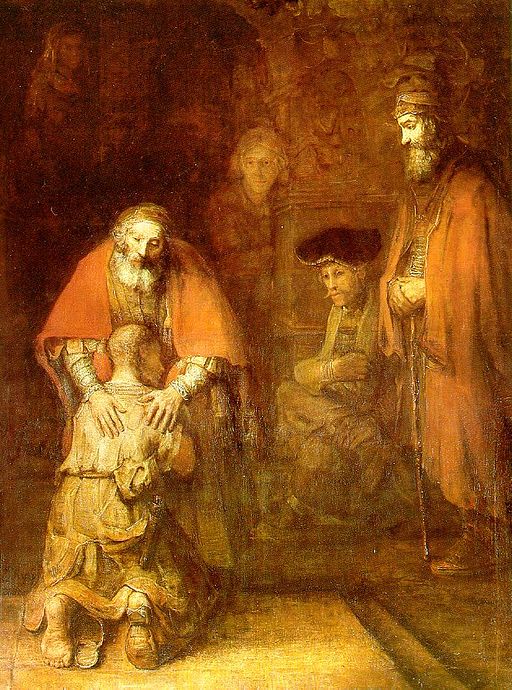
Henri Nouwen has a highly reviewed book about this painting and the parable behind it. I haven't yet read the book, but it seems to be about moving from being the prodigal son, to being the elder brother, to being the welcoming father.
Henri Nouwen has a highly reviewed book about this painting and the parable behind it. I haven't yet read the book, but it seems to be about moving from being the prodigal son, to being the elder brother, to being the welcoming father.
23 Şubat 2013 Cumartesi
Presidential Character: Week One, Guess Who
To contact us Click HERE
I threatened you all with pursuing a weekly write-up on Presidents regarding their Character traits as defined by David James Barber: the Active-Positive, the Active-Negative, the Passive-Positive, the Passive-Negative.
When one works a list of U.S. Presidents, one has to start (depending on the topic) with the first: George Washington.
Note: Okay, there were Presidents of the Congress before the Constitution was ratified, but dude they don't really count. Sorry, John Hansen...
Washington's character has been classified as Passive-Negative: basically, the defining trait is Withdrawn, an oddly unambitious leader in an ambitious office who answers to a sense of duty/obligation, does not seek conflict or political gaming, and has an open aversion to politics. This type only becomes President because it was expected of them, either from their friends or from the nation at large. And it Washington's case, it was expected of him by practically everyone: the entire model of the Presidency as designed by the Constitution's founders was based entirely on his role as both military commander and as presiding officer of the Constitutional Convention. If he had said "no" to being the first federal President, the whole deal would have collapsed, the young nation would have died on the vine, and he knew it.
It's not to say that P-Ns don't want to be leaders: Washington for example pursued a military career for both good and ill. But that was about the limits of his ambition. He loathed political deal-making, had to be pushed into making certain decisions. His primary aide, Treasury Secretary Alexander Hamilton, had to talk Washington into a second term convincing his former general that the United States needed four more years of his leadership to stabilize.
Why did Washington succeed (he's routinely listed in the Top Three Ever) as a Passive-Negative? Two reasons: he was above all a patriot who did what he thought best for the nation; and because oddly enough the nation needed him to be unambitious and self-limiting.
Washington is unique among Presidents because he came to power before partisan party formation. The original intent of the founders was to create a party-free political environment (which they saw as hindering their electoral model, the British Parliament), but parties still formed around key issues - finance vs. farming, foreign intrigue especially France vs. England - and key political figures such as Hamilton (Federalist) and Thomas Jefferson (Republican Democrat, which evolved to just Democrat). Washington's advantage was that - being above party - he thought first and foremost of the nation as a whole, and as such worked towards a recognized consensus between the growing factions and an awareness of how the nation was truly doing.
The best example of that was how Washington handled the European continental crisis of the French Revolution. Due to France's bankrupting itself to finance the American Revolution, and due to the example of the American colonies rebelling against the British king, France devolved into its own revolution and an overthrow of their king Louis XVI. Passions on the issue ran high. When Republic France fell into war against Britain and Spain, France sent a minister (ambassador) Genet to the United States to drum up support.
Passions on the issue were running high in America: half the nation openly supported another republican uprising especially with it being our recent French allies. But Washington took a good long review of the situation and noted the United States was still too young and unbalanced as a nation to get involved with an overseas conflict. The nation's finances were still a mess from the revolutionary era, the logistics of an overseas fight overwhelming, and the nation's best course at that moment was to get on good terms with as many European powers as possible, which actually meant getting on good terms with our recent opponents the Brits. Despite the pressures to come to the side of the nation that backed us in independence, Washington had to think of his nation's needs first. Washington issued a neutrality order, claiming the United States would not get involved in the war between Britain/Spain and France.
Genet ignored Washington's neutrality order and organized militias to attack Spanish-held Florida and privateer ships to raid British ships and Caribbean ports. Washington didn't faze Genet in the least: after all, he found thousands of Americans eagerly signing up to help his cause. But then Genet made the mistake of lying to Washington about the privateering when he met the President about getting the neutrality order revoked. When caught in that lie, even Genet's ally Jefferson abandoned him, Washington openly issued a letter reprimanding Genet, and the French government was publicly embarrassed. It didn't help Genet much when the French republican leaders fell to the more radical Jacobians and the Reign of Terror started: when the Jacobians recalled Genet, he begged Washington for asylum... and received it.
The second thing that Washington did - being unambitious and self-limiting - is easier to see because a lot of what the Presidency is all about today is still based on the precedents Washington set. The Constitution may spell out the specific things a President may do (Article II), but in practice no one really knew what a President COULD do... until Washington himself did them.
Article II may have a provision for "principal officers in executive departments" but no one knew what such a person could be. Washington named his advisors as Secretary of particular offices - State, Treasury, War, and Attorney General - and defined the scope of each position's duties and authorities under the Executive office. He made sure to make the appointments go through the Senate as established by the Advice and Consent clause in Article II.
One thing Washington did not do was impose himself much on the Congress: he fervently believed in the separation of powers between the Legislature and Executive. He rarely exercised his veto power although he was still the first to use it, and used it in a way to get Congress to revise that bill to a more bipartisan form, setting that precedent of veto power. He reportedly only tried once to impose himself on Congress when trying to get a treaty with a Native tribe passed, by showing up in person. The Senators present felt intimidated, insisted on more time with the treaty, and Washington stormed out, his hatred of politicking fully confirmed.
This was where the benefits of being a Passive president by nature helped the nation. A more Active president in office - say, John Adams or Thomas Jefferson, or even Alexander Hamilton (yes, he could have served if not for his scandalous behavior) - may have ignored many of the checks and separations of power in the Constitution, could have weakened the Legislature and/or Judiciary branches, and could have turned the Presidency into a Dictatorship. Adams' and Jefferson's own Presidencies showed hints of that, if not for Washington's setting of precedence limiting their future roles.
When one works a list of U.S. Presidents, one has to start (depending on the topic) with the first: George Washington.
Note: Okay, there were Presidents of the Congress before the Constitution was ratified, but dude they don't really count. Sorry, John Hansen...
Washington's character has been classified as Passive-Negative: basically, the defining trait is Withdrawn, an oddly unambitious leader in an ambitious office who answers to a sense of duty/obligation, does not seek conflict or political gaming, and has an open aversion to politics. This type only becomes President because it was expected of them, either from their friends or from the nation at large. And it Washington's case, it was expected of him by practically everyone: the entire model of the Presidency as designed by the Constitution's founders was based entirely on his role as both military commander and as presiding officer of the Constitutional Convention. If he had said "no" to being the first federal President, the whole deal would have collapsed, the young nation would have died on the vine, and he knew it.
It's not to say that P-Ns don't want to be leaders: Washington for example pursued a military career for both good and ill. But that was about the limits of his ambition. He loathed political deal-making, had to be pushed into making certain decisions. His primary aide, Treasury Secretary Alexander Hamilton, had to talk Washington into a second term convincing his former general that the United States needed four more years of his leadership to stabilize.
Why did Washington succeed (he's routinely listed in the Top Three Ever) as a Passive-Negative? Two reasons: he was above all a patriot who did what he thought best for the nation; and because oddly enough the nation needed him to be unambitious and self-limiting.
Washington is unique among Presidents because he came to power before partisan party formation. The original intent of the founders was to create a party-free political environment (which they saw as hindering their electoral model, the British Parliament), but parties still formed around key issues - finance vs. farming, foreign intrigue especially France vs. England - and key political figures such as Hamilton (Federalist) and Thomas Jefferson (Republican Democrat, which evolved to just Democrat). Washington's advantage was that - being above party - he thought first and foremost of the nation as a whole, and as such worked towards a recognized consensus between the growing factions and an awareness of how the nation was truly doing.
The best example of that was how Washington handled the European continental crisis of the French Revolution. Due to France's bankrupting itself to finance the American Revolution, and due to the example of the American colonies rebelling against the British king, France devolved into its own revolution and an overthrow of their king Louis XVI. Passions on the issue ran high. When Republic France fell into war against Britain and Spain, France sent a minister (ambassador) Genet to the United States to drum up support.
Passions on the issue were running high in America: half the nation openly supported another republican uprising especially with it being our recent French allies. But Washington took a good long review of the situation and noted the United States was still too young and unbalanced as a nation to get involved with an overseas conflict. The nation's finances were still a mess from the revolutionary era, the logistics of an overseas fight overwhelming, and the nation's best course at that moment was to get on good terms with as many European powers as possible, which actually meant getting on good terms with our recent opponents the Brits. Despite the pressures to come to the side of the nation that backed us in independence, Washington had to think of his nation's needs first. Washington issued a neutrality order, claiming the United States would not get involved in the war between Britain/Spain and France.
Genet ignored Washington's neutrality order and organized militias to attack Spanish-held Florida and privateer ships to raid British ships and Caribbean ports. Washington didn't faze Genet in the least: after all, he found thousands of Americans eagerly signing up to help his cause. But then Genet made the mistake of lying to Washington about the privateering when he met the President about getting the neutrality order revoked. When caught in that lie, even Genet's ally Jefferson abandoned him, Washington openly issued a letter reprimanding Genet, and the French government was publicly embarrassed. It didn't help Genet much when the French republican leaders fell to the more radical Jacobians and the Reign of Terror started: when the Jacobians recalled Genet, he begged Washington for asylum... and received it.
The second thing that Washington did - being unambitious and self-limiting - is easier to see because a lot of what the Presidency is all about today is still based on the precedents Washington set. The Constitution may spell out the specific things a President may do (Article II), but in practice no one really knew what a President COULD do... until Washington himself did them.
Article II may have a provision for "principal officers in executive departments" but no one knew what such a person could be. Washington named his advisors as Secretary of particular offices - State, Treasury, War, and Attorney General - and defined the scope of each position's duties and authorities under the Executive office. He made sure to make the appointments go through the Senate as established by the Advice and Consent clause in Article II.
One thing Washington did not do was impose himself much on the Congress: he fervently believed in the separation of powers between the Legislature and Executive. He rarely exercised his veto power although he was still the first to use it, and used it in a way to get Congress to revise that bill to a more bipartisan form, setting that precedent of veto power. He reportedly only tried once to impose himself on Congress when trying to get a treaty with a Native tribe passed, by showing up in person. The Senators present felt intimidated, insisted on more time with the treaty, and Washington stormed out, his hatred of politicking fully confirmed.
This was where the benefits of being a Passive president by nature helped the nation. A more Active president in office - say, John Adams or Thomas Jefferson, or even Alexander Hamilton (yes, he could have served if not for his scandalous behavior) - may have ignored many of the checks and separations of power in the Constitution, could have weakened the Legislature and/or Judiciary branches, and could have turned the Presidency into a Dictatorship. Adams' and Jefferson's own Presidencies showed hints of that, if not for Washington's setting of precedence limiting their future roles.
Here's a First: a Poll
To contact us Click HERE
It's probably a bit messy but we'll see how it works...
Update (1/13/13): Noooooo. The Treasury, White House, and Federal Reserve spokespeople have all said they won't use the Platinum Coin to pay off the debt if Congress remains insane. Defeats the whole purpose of a poll. Sniff... I can't ever have the fun toys...
What image should be on the face of the $1 Trillion Platinum Coin?
Update (1/13/13): Noooooo. The Treasury, White House, and Federal Reserve spokespeople have all said they won't use the Platinum Coin to pay off the debt if Congress remains insane. Defeats the whole purpose of a poll. Sniff... I can't ever have the fun toys...
What image should be on the face of the $1 Trillion Platinum Coin?
Just remember kids, the rules on coinage is that it can't be a currently living President, so all those mock-ups with Obama's face on the front, you're doing it wrong kiddo...
Presidential Character: Week Three, It's All Jefferson's Fault
To contact us Click HERE
It's a hell of a way to open up a blog post, you think? Blaming Thomas Jefferson for everything?
Well, not everything. But still...
We're up to the example of Presidential Character for the Active-Positive types. The one word to describe this type is Adaptive: these are the guys who enjoy not just the perks of being the President but also the duties, self-deprecating but also self-confident, self-starters who seek accomplishments and problems to solve before anyone else even realizes there's a problem, and someone willing to compromise with others in politics to get things done.
The perfect example of Jefferson's adaptive style was the biggest event during his tenure: the Louisiana Purchase. By Jefferson's administration France fell under the rule of Napoleon Bonaparte, and during his reign building up to Emperor Napoleon had negotiated Spain - then a vassal state under his brother's rule - to hand over the Louisiana Territory that took up the middle third of the North American continent. His intent was an overseas empire combined with French holdings in the Caribbean. However, ongoing disasters with Haiti including a slave uprising discouraged Napoleon to where he decided against keeping it. At the same time, Jefferson had sent envoys to France to negotiate either a lease or the purchase of the City of New Orleans, the key trading port of the Mississippi River. Jefferson feared that if Napoleon secured Louisiana, he could tie up a major waterway route for the western edge of where the United States then reached.
Instead of negotiating over New Orleans, Napoleon offered up all of the Louisiana Territory. For $15 million. Even in that time, this was effing dirt-cheap (roughly 3 cents for every acre) and essentially the biggest land deal of the millennium (well, for the U.S. For the native tribes already living in the Territory, they never saw one red cent). Napoleon either didn't know the value of land, or simply wanted to get rid of what he then saw as useless (he also probably sought to buy off American neutrality as his war against Britain was kicking into high gear again).
This quickly became a major dilemma for Jefferson, for two reasons: One, he simply wasn't prepared for such a major land-mass addition to the nation's frontier; two, there wasn't any rule for this anywhere in the Constitution.
I need to back up a bit and note how Jefferson was the leader, the banner carrier of the Democratic-Republican Party. Unlike the Federalists who used a loose interpretation of the Constitution to establish laws and precedence, the Democrats believed in strict interpretation of the Constitution, including the limitations of powers on the Executive and ensuring the states had rights nearly comparable to the federal government. Jefferson's original view of government was opposed to a strong Federal system.
But now here was something challenging that view. He may have had power to conduct treaties and leasing arrangements, but there was no authority in the Constitution to make a land purchase from a foreign nation of this size. Jefferson could have gone to Congress, explained the deal Napoleon was offering, and wait for Congress to give him the political authority via amendment to get the deal done. But that meant working with a Congress that could bicker over every detail, delaying what was clearly an impulse buy: Napoleon could well change his mind within another week or month waiting for something to happen and kill the offer.
So Jefferson did what any Active-Positive would do: he broke his own rules. He authorized the purchase without first securing Constitutional authority to do so, pressing Congress to get the funds lined up as quick as possible.
And so, thanks to Jefferson's A-P attitudes, we went from being a decent-sized nation made up of states into an expanding pre-formed empire with enough territory to double in size and to equal the same land-mass as most of Europe. Before this, no one had any notion of Manifest Destiny: the Pacific Coast seemed so far off. After this, reaching the Pacific was now a genuine possibility (and the Lewis and Clark Corps of Discovery proved it, although their original intent to find a Northwest Passage water route didn't pan out). And now all of a sudden the issue of slavery, which was confined to southern states and territories and could have moved no further than the Mississippi, became a bigger hot potato... underlying the passions under the colonization of Texas by southerners, leading to their rebellion against Mexico... leading to Texas annexation into the U.S. and soon after stirring up the Mexican-American War, solidifying our nation's reach between two oceans... adding even more territory that slave-owners sought to acquire for their ever-growing reliance on slave labor economics.
This kinda needs to be pointed out that Active-Positive Presidents are NOT always good things, no matter how... positive... the wording seems. A-Ps are active and very aggressive with their powers... and while they resolve a lot of challenges they never take into consideration the consequences of their actions (political axiom: Every political action generates an unequal and disproportionate reaction (pa < dpr) ). In short, they are quick to act, but fail to plan ahead (Active-Negatives tend to at least put more thought into what they're doing).
Another example is Jefferson's attempt to engage Great Britain for transgressions during the Napoleonic Wars. The United States tried to remain neutral but England kept impressing - raiding American ships and taking crewmen the British claimed were deserters - to the point of the Chesapeake-Leopard Affair. Rather than pursue the threat of war - Jefferson knew as his predecessors did that the U.S. was in no condition for war - Jefferson tried instead a series of embargoes blocking off all trade with Great Britain. He figured that the lost trade would hurt England enough to force them to terms. He failed to figure that the American traders would also get hurt in the process - and that England had other trade partners and colonial holdings to keep them stocked with supplies. The embargoes failed quickly and spectacularly, causing major rifts across the U.S., and Jefferson ended his term of office repealing those acts before they caused more damage.
Jefferson's two terms of office were very active indeed, more than the administrations of the first two Presidents Washington and Adams. But a lot of those actions had unintended consequences, which led to things like the War of 1812, the march of Manifest Destiny - which Natives, Mexicans, and even Americans would come to loath - and the increasing debate over slavery. Whether or not Jefferson's actions were good, the positive aspects of his actions are obvious... and the negative aspects are obvious as well. The debates will not end here. Not until much later...
Well, not everything. But still...
We're up to the example of Presidential Character for the Active-Positive types. The one word to describe this type is Adaptive: these are the guys who enjoy not just the perks of being the President but also the duties, self-deprecating but also self-confident, self-starters who seek accomplishments and problems to solve before anyone else even realizes there's a problem, and someone willing to compromise with others in politics to get things done.
The perfect example of Jefferson's adaptive style was the biggest event during his tenure: the Louisiana Purchase. By Jefferson's administration France fell under the rule of Napoleon Bonaparte, and during his reign building up to Emperor Napoleon had negotiated Spain - then a vassal state under his brother's rule - to hand over the Louisiana Territory that took up the middle third of the North American continent. His intent was an overseas empire combined with French holdings in the Caribbean. However, ongoing disasters with Haiti including a slave uprising discouraged Napoleon to where he decided against keeping it. At the same time, Jefferson had sent envoys to France to negotiate either a lease or the purchase of the City of New Orleans, the key trading port of the Mississippi River. Jefferson feared that if Napoleon secured Louisiana, he could tie up a major waterway route for the western edge of where the United States then reached.
Instead of negotiating over New Orleans, Napoleon offered up all of the Louisiana Territory. For $15 million. Even in that time, this was effing dirt-cheap (roughly 3 cents for every acre) and essentially the biggest land deal of the millennium (well, for the U.S. For the native tribes already living in the Territory, they never saw one red cent). Napoleon either didn't know the value of land, or simply wanted to get rid of what he then saw as useless (he also probably sought to buy off American neutrality as his war against Britain was kicking into high gear again).
This quickly became a major dilemma for Jefferson, for two reasons: One, he simply wasn't prepared for such a major land-mass addition to the nation's frontier; two, there wasn't any rule for this anywhere in the Constitution.
I need to back up a bit and note how Jefferson was the leader, the banner carrier of the Democratic-Republican Party. Unlike the Federalists who used a loose interpretation of the Constitution to establish laws and precedence, the Democrats believed in strict interpretation of the Constitution, including the limitations of powers on the Executive and ensuring the states had rights nearly comparable to the federal government. Jefferson's original view of government was opposed to a strong Federal system.
But now here was something challenging that view. He may have had power to conduct treaties and leasing arrangements, but there was no authority in the Constitution to make a land purchase from a foreign nation of this size. Jefferson could have gone to Congress, explained the deal Napoleon was offering, and wait for Congress to give him the political authority via amendment to get the deal done. But that meant working with a Congress that could bicker over every detail, delaying what was clearly an impulse buy: Napoleon could well change his mind within another week or month waiting for something to happen and kill the offer.
So Jefferson did what any Active-Positive would do: he broke his own rules. He authorized the purchase without first securing Constitutional authority to do so, pressing Congress to get the funds lined up as quick as possible.
And so, thanks to Jefferson's A-P attitudes, we went from being a decent-sized nation made up of states into an expanding pre-formed empire with enough territory to double in size and to equal the same land-mass as most of Europe. Before this, no one had any notion of Manifest Destiny: the Pacific Coast seemed so far off. After this, reaching the Pacific was now a genuine possibility (and the Lewis and Clark Corps of Discovery proved it, although their original intent to find a Northwest Passage water route didn't pan out). And now all of a sudden the issue of slavery, which was confined to southern states and territories and could have moved no further than the Mississippi, became a bigger hot potato... underlying the passions under the colonization of Texas by southerners, leading to their rebellion against Mexico... leading to Texas annexation into the U.S. and soon after stirring up the Mexican-American War, solidifying our nation's reach between two oceans... adding even more territory that slave-owners sought to acquire for their ever-growing reliance on slave labor economics.
This kinda needs to be pointed out that Active-Positive Presidents are NOT always good things, no matter how... positive... the wording seems. A-Ps are active and very aggressive with their powers... and while they resolve a lot of challenges they never take into consideration the consequences of their actions (political axiom: Every political action generates an unequal and disproportionate reaction (pa < dpr) ). In short, they are quick to act, but fail to plan ahead (Active-Negatives tend to at least put more thought into what they're doing).
Another example is Jefferson's attempt to engage Great Britain for transgressions during the Napoleonic Wars. The United States tried to remain neutral but England kept impressing - raiding American ships and taking crewmen the British claimed were deserters - to the point of the Chesapeake-Leopard Affair. Rather than pursue the threat of war - Jefferson knew as his predecessors did that the U.S. was in no condition for war - Jefferson tried instead a series of embargoes blocking off all trade with Great Britain. He figured that the lost trade would hurt England enough to force them to terms. He failed to figure that the American traders would also get hurt in the process - and that England had other trade partners and colonial holdings to keep them stocked with supplies. The embargoes failed quickly and spectacularly, causing major rifts across the U.S., and Jefferson ended his term of office repealing those acts before they caused more damage.
Jefferson's two terms of office were very active indeed, more than the administrations of the first two Presidents Washington and Adams. But a lot of those actions had unintended consequences, which led to things like the War of 1812, the march of Manifest Destiny - which Natives, Mexicans, and even Americans would come to loath - and the increasing debate over slavery. Whether or not Jefferson's actions were good, the positive aspects of his actions are obvious... and the negative aspects are obvious as well. The debates will not end here. Not until much later...
What Is Needed To Fix Florida's (and the Nation's) Voting Woes
To contact us Click HERE
The finger-pointing and arguing over the debacle that was the 2012 elections process - hundreds of thousands discouraged from voting due to long lines, those long lines due to ballots being 4-12 pages long (!) - has begun in earnest, but instead of finger-pointing we need to - as a state and as a nation - make these very important reforms to ease voter access and improve voter rights.
1) We need to get ALL eligible people who can vote registered to vote.
2) We need to make it easier for people to vote, period. That means giving them the ability to vote wherever they can on election day or during pre-election early voting days. People get confused by being required to vote by precinct or specific location which sometimes are miles away while a perfectly good precinct is right down the block, and some people have moved since their last registered address and trying to vote from a new address. Same-Day voter registration updating the voter's proper address to allow them to vote right away. Creating a uniform balloting system that identifies the voter's district needs and prints (or electronically displays) the proper ballot - something elections offices here in Florida can do during Early Voting polling - can reduce the need to vote at a specific (and oft-times overwhelmed) precinct: just think of all those voting lines in Dade County that could have been eased by sending voters to nearby polling places that weren't overwhelmed.
3) We need to drop the ban on ex-felons denied the right to vote, and forcing them to re-register to get their right to vote restored. This should be an automatic thing: they've legally paid their debt to society, once out of prison the ex-felon should have the right to act like a citizen again as part of their probationary/ rehabilitative process. Having the ex-felons jump through years' worth of bureaucratic hoops is insulting.
4) We need to drop gerrymandering. Gerrymandering literally wastes people's votes.
5) A Photo ID for voting actually does make sense, alongside the signature requirement when showing up to vote. But the states need to issue such photo IDs at no cost: voting needs to be free in every way possible.
6) We need to have more Early Voting days, not fewer.
7) We need to move Election Day from a Tuesday - the middle of a workweek - to a weekend day like Friday or Saturday or Sunday. AND make the Election Day a national holiday. Back in the old days when voting was done at the county seat and people had to travel by horse or foot, it may have made sense to have elections on a workday when people would be at the county seat on other business. But not anymore. We need to make sure people can get to vote, and making the Big Election a banking/school holiday nearest to the weekend frees up a ton of people to give them all day to get out the vote.
8) We need to include a None Of The Above option for every candidate. It will get messy but if all candidates for an elected office are just disgusting human beings, the voters should have the right to say No to the offal the parties are shoving at them. It should make the parties' more responsive (maybe).
Any other suggestions?
1) We need to get ALL eligible people who can vote registered to vote.
2) We need to make it easier for people to vote, period. That means giving them the ability to vote wherever they can on election day or during pre-election early voting days. People get confused by being required to vote by precinct or specific location which sometimes are miles away while a perfectly good precinct is right down the block, and some people have moved since their last registered address and trying to vote from a new address. Same-Day voter registration updating the voter's proper address to allow them to vote right away. Creating a uniform balloting system that identifies the voter's district needs and prints (or electronically displays) the proper ballot - something elections offices here in Florida can do during Early Voting polling - can reduce the need to vote at a specific (and oft-times overwhelmed) precinct: just think of all those voting lines in Dade County that could have been eased by sending voters to nearby polling places that weren't overwhelmed.
3) We need to drop the ban on ex-felons denied the right to vote, and forcing them to re-register to get their right to vote restored. This should be an automatic thing: they've legally paid their debt to society, once out of prison the ex-felon should have the right to act like a citizen again as part of their probationary/ rehabilitative process. Having the ex-felons jump through years' worth of bureaucratic hoops is insulting.
4) We need to drop gerrymandering. Gerrymandering literally wastes people's votes.
5) A Photo ID for voting actually does make sense, alongside the signature requirement when showing up to vote. But the states need to issue such photo IDs at no cost: voting needs to be free in every way possible.
6) We need to have more Early Voting days, not fewer.
7) We need to move Election Day from a Tuesday - the middle of a workweek - to a weekend day like Friday or Saturday or Sunday. AND make the Election Day a national holiday. Back in the old days when voting was done at the county seat and people had to travel by horse or foot, it may have made sense to have elections on a workday when people would be at the county seat on other business. But not anymore. We need to make sure people can get to vote, and making the Big Election a banking/school holiday nearest to the weekend frees up a ton of people to give them all day to get out the vote.
8) We need to include a None Of The Above option for every candidate. It will get messy but if all candidates for an elected office are just disgusting human beings, the voters should have the right to say No to the offal the parties are shoving at them. It should make the parties' more responsive (maybe).
Any other suggestions?
Wouldn't You Know It, the Busiest Weekend of My Life...
To contact us Click HERE
...and I miss out on the huge news of the Pope resigning to make way for a hyperspace bypass to make way for yet another groomed arch-conservative Cardinal who's going to use the Second Vatican Council decisions as toilet paper. Maybe...
How much of this is due to the declining health of Benedict XVI - and how much is due to the fact that as Cardinal Ratzinger he presided over the investigations of hundreds of increasingly public revelations of pedophile behavior of priests some of which remained under wraps in defiance of other law enforcement agencies' attempts to bring about charges - remains to be seen. In truth, the Pope wasn't a young man when he took the office back in 2005 anyway: also in truth, it's hurting the Church's claim to moral certainty when they've been implicated in massive cover-ups and allowances of child rape to continue even after the pedophile priests were identified and confirmed, and that the current Pope for good or ill had a hand in the internal affairs.
The Church will hold its Papal conclave by the end of the month. If they can find a Pope willing to confront the truth of the sexual abuse, and willing to recognize that certain traditions that allow pedophiles to flourish in their organiztion need to pass on, then best of luck and God Bless. But Benedict and his predecessor Pope John Paul II spent a lot of decades purging out the more liberal bishops and cardinals, leaving the more conservative (and the ones less likely to accept reform) as likely Popes. And this sexual abuse mess has reached every corner of their institution... finding a bishop or cardinal free of the taint would be truly a stroke of God's Blessing...
P.S. Is this gonna screw up stuff like Ash Wednesday or anything?
How much of this is due to the declining health of Benedict XVI - and how much is due to the fact that as Cardinal Ratzinger he presided over the investigations of hundreds of increasingly public revelations of pedophile behavior of priests some of which remained under wraps in defiance of other law enforcement agencies' attempts to bring about charges - remains to be seen. In truth, the Pope wasn't a young man when he took the office back in 2005 anyway: also in truth, it's hurting the Church's claim to moral certainty when they've been implicated in massive cover-ups and allowances of child rape to continue even after the pedophile priests were identified and confirmed, and that the current Pope for good or ill had a hand in the internal affairs.
The Church will hold its Papal conclave by the end of the month. If they can find a Pope willing to confront the truth of the sexual abuse, and willing to recognize that certain traditions that allow pedophiles to flourish in their organiztion need to pass on, then best of luck and God Bless. But Benedict and his predecessor Pope John Paul II spent a lot of decades purging out the more liberal bishops and cardinals, leaving the more conservative (and the ones less likely to accept reform) as likely Popes. And this sexual abuse mess has reached every corner of their institution... finding a bishop or cardinal free of the taint would be truly a stroke of God's Blessing...
P.S. Is this gonna screw up stuff like Ash Wednesday or anything?
22 Şubat 2013 Cuma
My Two Cents On The Platinum Coin (Yeah, I Went There)
To contact us Click HERE
With the Fiscal Cliff no longer an issue, the next scheduled disaster from our elected leaders is apparently yet another Debt Ceiling vote needed to ensure the Federal government can pay out those Medicare checks, military pay, and basically keeping the street lights on.
There's a good argument to be made that we don't even NEED a Debt Ceiling vote, the whole thing can be done through other budgetary bills and never be an issue: but sad to say the powers that be in Congress don't want to give up their ability to be bratty monsters to their fellow Americans, and also they've realized they can use this man-made disaster to wriggle out some twisted deals making the rest of us suffer in the process.
Considering how broken the system is, we've got a ton of people thinking outside of the box, using some lateral thinking. And one idea that's come up - it actually started brewing last year when the government shutdown over the last Debt Ceiling vote happened - is the fact that under current law the Treasury Department can cast a platinum coin, give it any value they deem fit, and then use that coin as revenue to be spent however the government needs. The actual value of platinum as a metal isn't at stake - this is called Seigniorage - all that matters is what value the Treasury Secretary can put on that coin. As a result, the Secretary could stamp it as a One-Trillion-Dollar (that's 1,000,000,000,000.00 if you wanna count out the zeroes) Coin and that coin, probably no bigger than an Eisenhower Silver Dollar, will be worth that one trillion.
A law originally designed to allow the government to make and sell commemorative coins to a collectibles industry to turn a modest profit could be used to tell Congress to go screw itself over the Debt Ceiling nonsense:
That persons among the Obama administration are talking seriously about this of course has the Far Right in an tizzy. Most of them don't even realize the concept of seigniorage and are trying to mock the Platinum Coin proponents by thinking one trillion worth of platinum has to be cast for the world's largest coin. The truth is much simpler: the coin can be the size of a DIME (our smallest coinage) and as long it's made out of platinum it can get valued however high it can, meaning it CAN be a One-Trillion Coin.
This may look on its face like a silly solution. But the reason we're even thinking of this as a legitimate possibility is due to the fact that Congress is broken. Full-on partisanship rules the floor, and the House Republicans have convinced themselves to never retreat on any issue that would give Obama a good day. Especially if they can use their hostage-taking on the Debt Ceiling vote to force harsh social spending cuts on the Democrats. There is no reason to believe that the House GOP will negotiate in good faith to resolve the matter, and we'll be facing yet another showdown just like in 2011 that crimped the nation's bond rating and caused enough financial chaos to choke a bull.
To consider Matthew O'Brien's thoughts:
There's a good argument to be made that we don't even NEED a Debt Ceiling vote, the whole thing can be done through other budgetary bills and never be an issue: but sad to say the powers that be in Congress don't want to give up their ability to be bratty monsters to their fellow Americans, and also they've realized they can use this man-made disaster to wriggle out some twisted deals making the rest of us suffer in the process.
Considering how broken the system is, we've got a ton of people thinking outside of the box, using some lateral thinking. And one idea that's come up - it actually started brewing last year when the government shutdown over the last Debt Ceiling vote happened - is the fact that under current law the Treasury Department can cast a platinum coin, give it any value they deem fit, and then use that coin as revenue to be spent however the government needs. The actual value of platinum as a metal isn't at stake - this is called Seigniorage - all that matters is what value the Treasury Secretary can put on that coin. As a result, the Secretary could stamp it as a One-Trillion-Dollar (that's 1,000,000,000,000.00 if you wanna count out the zeroes) Coin and that coin, probably no bigger than an Eisenhower Silver Dollar, will be worth that one trillion.
A law originally designed to allow the government to make and sell commemorative coins to a collectibles industry to turn a modest profit could be used to tell Congress to go screw itself over the Debt Ceiling nonsense:
As former Congressman and author of the original bill Mike Castle told Dylan Matthews of the Washington Post, the intent was to use the government's seigniorage power to very modestly reduce the deficit. Seigniorage is the delightfully literal concept of making money by making money. It's the difference between the cost of creating currency, and the value you assign to that currency -- in other words, the "profit" governments get from minting money. The trillion-dollar coin is seigniorage just like commemorative coins are seigniorage -- well, except that the trillion-dollar coin is a whole, whole lot more of it. Even if you don't find this terribly convincing, it doesn't really matter. The plain text of the law, not its intent, is what matters. And that means the trillion-dollar coin is almost certainly legal.To be fair, our debt obligations aren't as high as one trillion: it's roughly about 52 billion. A more modest plan would be to mint more than 52 platinum coins at One-Billion each and save the One-Trillion coinage for a more special occasion.
That persons among the Obama administration are talking seriously about this of course has the Far Right in an tizzy. Most of them don't even realize the concept of seigniorage and are trying to mock the Platinum Coin proponents by thinking one trillion worth of platinum has to be cast for the world's largest coin. The truth is much simpler: the coin can be the size of a DIME (our smallest coinage) and as long it's made out of platinum it can get valued however high it can, meaning it CAN be a One-Trillion Coin.
This may look on its face like a silly solution. But the reason we're even thinking of this as a legitimate possibility is due to the fact that Congress is broken. Full-on partisanship rules the floor, and the House Republicans have convinced themselves to never retreat on any issue that would give Obama a good day. Especially if they can use their hostage-taking on the Debt Ceiling vote to force harsh social spending cuts on the Democrats. There is no reason to believe that the House GOP will negotiate in good faith to resolve the matter, and we'll be facing yet another showdown just like in 2011 that crimped the nation's bond rating and caused enough financial chaos to choke a bull.
To consider Matthew O'Brien's thoughts:
As my colleague Derek Thompson explains, a world without a debt limit increase is a world where the government has to stop paying 40 percent of its bills overnight. Everything from food stamps to defense spending to maybe even Social Security benefits would go unpaid. Now, Congress would presumably relent after a few weeks of this, but if it didn't, the economic damage would be mind-blowing...Personally, I kinda find this One-Trillion Coin idea amusing, a creative solution to a bankrupt problem. But I'm kinda also with O'Brien here: I don't think we should be jumping straight at the platinum coin as the immediate solution. The real problem is that we've got a Republican base pushing for a default (remember Grover Norquist, kids? He wants to drown your government in his bathtub) no matter the hazards. Going to the coin solution isn't going to solve the way Congress does business. Congress needs serious fixing, especially considering how much of a sick joke the Debt Ceiling really is. Get rid of the Debt Ceiling. That's the real solution. The pity of it is, that also takes real political courage right now, and NO ONE has that.
And that brings us to the trillion dollar coin. If you haven't heard, there's a law that technically lets the Treasury mint platinum, and only platinum, coins in whatever denomination it chooses. It's legal, it's doubtful anybody would have standing to challenge it in court, and it would let us keep paying our bills, without setting off massive inflation, if the debt ceiling isn't raised. But as Ross Douthat and Ezra Klein point out, the politics of it are toxic. It sounds crazy, and it would look like a crazy power grab, all of which would empower the very Republicans pushing us towards a possible default. Risking complete catastrophe is worth it if it will break the swamp fever according to this logic. That very well could be true if we were talking about a run-of-the-mill catastrophe, but it falls apart when we're talking about a debt default. The financial fallout and increase in our long-term borrowing costs are much too high a price to pay for discrediting the default caucus. Here's the way out. If Congress doesn't lift the debt ceiling in time, Treasury should prioritize payments while Obama and Republicans negotiate an increase. But if a day ever comes when incoming revenues won't meet interest payments, Treasury should mint a platinum coin to cover the difference. As Steve Waldman argued, use a billion dollar instead of a trillion dollar coin -- and only as a last resort to avoid irrevocable damage.The full faith and credit is worth a platinum coin.
Here's a First: a Poll
To contact us Click HERE
It's probably a bit messy but we'll see how it works...
Update (1/13/13): Noooooo. The Treasury, White House, and Federal Reserve spokespeople have all said they won't use the Platinum Coin to pay off the debt if Congress remains insane. Defeats the whole purpose of a poll. Sniff... I can't ever have the fun toys...
What image should be on the face of the $1 Trillion Platinum Coin?
Update (1/13/13): Noooooo. The Treasury, White House, and Federal Reserve spokespeople have all said they won't use the Platinum Coin to pay off the debt if Congress remains insane. Defeats the whole purpose of a poll. Sniff... I can't ever have the fun toys...
What image should be on the face of the $1 Trillion Platinum Coin?
Just remember kids, the rules on coinage is that it can't be a currently living President, so all those mock-ups with Obama's face on the front, you're doing it wrong kiddo...
Presidential Character: Week Three, It's All Jefferson's Fault
To contact us Click HERE
It's a hell of a way to open up a blog post, you think? Blaming Thomas Jefferson for everything?
Well, not everything. But still...
We're up to the example of Presidential Character for the Active-Positive types. The one word to describe this type is Adaptive: these are the guys who enjoy not just the perks of being the President but also the duties, self-deprecating but also self-confident, self-starters who seek accomplishments and problems to solve before anyone else even realizes there's a problem, and someone willing to compromise with others in politics to get things done.
The perfect example of Jefferson's adaptive style was the biggest event during his tenure: the Louisiana Purchase. By Jefferson's administration France fell under the rule of Napoleon Bonaparte, and during his reign building up to Emperor Napoleon had negotiated Spain - then a vassal state under his brother's rule - to hand over the Louisiana Territory that took up the middle third of the North American continent. His intent was an overseas empire combined with French holdings in the Caribbean. However, ongoing disasters with Haiti including a slave uprising discouraged Napoleon to where he decided against keeping it. At the same time, Jefferson had sent envoys to France to negotiate either a lease or the purchase of the City of New Orleans, the key trading port of the Mississippi River. Jefferson feared that if Napoleon secured Louisiana, he could tie up a major waterway route for the western edge of where the United States then reached.
Instead of negotiating over New Orleans, Napoleon offered up all of the Louisiana Territory. For $15 million. Even in that time, this was effing dirt-cheap (roughly 3 cents for every acre) and essentially the biggest land deal of the millennium (well, for the U.S. For the native tribes already living in the Territory, they never saw one red cent). Napoleon either didn't know the value of land, or simply wanted to get rid of what he then saw as useless (he also probably sought to buy off American neutrality as his war against Britain was kicking into high gear again).
This quickly became a major dilemma for Jefferson, for two reasons: One, he simply wasn't prepared for such a major land-mass addition to the nation's frontier; two, there wasn't any rule for this anywhere in the Constitution.
I need to back up a bit and note how Jefferson was the leader, the banner carrier of the Democratic-Republican Party. Unlike the Federalists who used a loose interpretation of the Constitution to establish laws and precedence, the Democrats believed in strict interpretation of the Constitution, including the limitations of powers on the Executive and ensuring the states had rights nearly comparable to the federal government. Jefferson's original view of government was opposed to a strong Federal system.
But now here was something challenging that view. He may have had power to conduct treaties and leasing arrangements, but there was no authority in the Constitution to make a land purchase from a foreign nation of this size. Jefferson could have gone to Congress, explained the deal Napoleon was offering, and wait for Congress to give him the political authority via amendment to get the deal done. But that meant working with a Congress that could bicker over every detail, delaying what was clearly an impulse buy: Napoleon could well change his mind within another week or month waiting for something to happen and kill the offer.
So Jefferson did what any Active-Positive would do: he broke his own rules. He authorized the purchase without first securing Constitutional authority to do so, pressing Congress to get the funds lined up as quick as possible.
And so, thanks to Jefferson's A-P attitudes, we went from being a decent-sized nation made up of states into an expanding pre-formed empire with enough territory to double in size and to equal the same land-mass as most of Europe. Before this, no one had any notion of Manifest Destiny: the Pacific Coast seemed so far off. After this, reaching the Pacific was now a genuine possibility (and the Lewis and Clark Corps of Discovery proved it, although their original intent to find a Northwest Passage water route didn't pan out). And now all of a sudden the issue of slavery, which was confined to southern states and territories and could have moved no further than the Mississippi, became a bigger hot potato... underlying the passions under the colonization of Texas by southerners, leading to their rebellion against Mexico... leading to Texas annexation into the U.S. and soon after stirring up the Mexican-American War, solidifying our nation's reach between two oceans... adding even more territory that slave-owners sought to acquire for their ever-growing reliance on slave labor economics.
This kinda needs to be pointed out that Active-Positive Presidents are NOT always good things, no matter how... positive... the wording seems. A-Ps are active and very aggressive with their powers... and while they resolve a lot of challenges they never take into consideration the consequences of their actions (political axiom: Every political action generates an unequal and disproportionate reaction (pa < dpr) ). In short, they are quick to act, but fail to plan ahead (Active-Negatives tend to at least put more thought into what they're doing).
Another example is Jefferson's attempt to engage Great Britain for transgressions during the Napoleonic Wars. The United States tried to remain neutral but England kept impressing - raiding American ships and taking crewmen the British claimed were deserters - to the point of the Chesapeake-Leopard Affair. Rather than pursue the threat of war - Jefferson knew as his predecessors did that the U.S. was in no condition for war - Jefferson tried instead a series of embargoes blocking off all trade with Great Britain. He figured that the lost trade would hurt England enough to force them to terms. He failed to figure that the American traders would also get hurt in the process - and that England had other trade partners and colonial holdings to keep them stocked with supplies. The embargoes failed quickly and spectacularly, causing major rifts across the U.S., and Jefferson ended his term of office repealing those acts before they caused more damage.
Jefferson's two terms of office were very active indeed, more than the administrations of the first two Presidents Washington and Adams. But a lot of those actions had unintended consequences, which led to things like the War of 1812, the march of Manifest Destiny - which Natives, Mexicans, and even Americans would come to loath - and the increasing debate over slavery. Whether or not Jefferson's actions were good, the positive aspects of his actions are obvious... and the negative aspects are obvious as well. The debates will not end here. Not until much later...
Well, not everything. But still...
We're up to the example of Presidential Character for the Active-Positive types. The one word to describe this type is Adaptive: these are the guys who enjoy not just the perks of being the President but also the duties, self-deprecating but also self-confident, self-starters who seek accomplishments and problems to solve before anyone else even realizes there's a problem, and someone willing to compromise with others in politics to get things done.
The perfect example of Jefferson's adaptive style was the biggest event during his tenure: the Louisiana Purchase. By Jefferson's administration France fell under the rule of Napoleon Bonaparte, and during his reign building up to Emperor Napoleon had negotiated Spain - then a vassal state under his brother's rule - to hand over the Louisiana Territory that took up the middle third of the North American continent. His intent was an overseas empire combined with French holdings in the Caribbean. However, ongoing disasters with Haiti including a slave uprising discouraged Napoleon to where he decided against keeping it. At the same time, Jefferson had sent envoys to France to negotiate either a lease or the purchase of the City of New Orleans, the key trading port of the Mississippi River. Jefferson feared that if Napoleon secured Louisiana, he could tie up a major waterway route for the western edge of where the United States then reached.
Instead of negotiating over New Orleans, Napoleon offered up all of the Louisiana Territory. For $15 million. Even in that time, this was effing dirt-cheap (roughly 3 cents for every acre) and essentially the biggest land deal of the millennium (well, for the U.S. For the native tribes already living in the Territory, they never saw one red cent). Napoleon either didn't know the value of land, or simply wanted to get rid of what he then saw as useless (he also probably sought to buy off American neutrality as his war against Britain was kicking into high gear again).
This quickly became a major dilemma for Jefferson, for two reasons: One, he simply wasn't prepared for such a major land-mass addition to the nation's frontier; two, there wasn't any rule for this anywhere in the Constitution.
I need to back up a bit and note how Jefferson was the leader, the banner carrier of the Democratic-Republican Party. Unlike the Federalists who used a loose interpretation of the Constitution to establish laws and precedence, the Democrats believed in strict interpretation of the Constitution, including the limitations of powers on the Executive and ensuring the states had rights nearly comparable to the federal government. Jefferson's original view of government was opposed to a strong Federal system.
But now here was something challenging that view. He may have had power to conduct treaties and leasing arrangements, but there was no authority in the Constitution to make a land purchase from a foreign nation of this size. Jefferson could have gone to Congress, explained the deal Napoleon was offering, and wait for Congress to give him the political authority via amendment to get the deal done. But that meant working with a Congress that could bicker over every detail, delaying what was clearly an impulse buy: Napoleon could well change his mind within another week or month waiting for something to happen and kill the offer.
So Jefferson did what any Active-Positive would do: he broke his own rules. He authorized the purchase without first securing Constitutional authority to do so, pressing Congress to get the funds lined up as quick as possible.
And so, thanks to Jefferson's A-P attitudes, we went from being a decent-sized nation made up of states into an expanding pre-formed empire with enough territory to double in size and to equal the same land-mass as most of Europe. Before this, no one had any notion of Manifest Destiny: the Pacific Coast seemed so far off. After this, reaching the Pacific was now a genuine possibility (and the Lewis and Clark Corps of Discovery proved it, although their original intent to find a Northwest Passage water route didn't pan out). And now all of a sudden the issue of slavery, which was confined to southern states and territories and could have moved no further than the Mississippi, became a bigger hot potato... underlying the passions under the colonization of Texas by southerners, leading to their rebellion against Mexico... leading to Texas annexation into the U.S. and soon after stirring up the Mexican-American War, solidifying our nation's reach between two oceans... adding even more territory that slave-owners sought to acquire for their ever-growing reliance on slave labor economics.
This kinda needs to be pointed out that Active-Positive Presidents are NOT always good things, no matter how... positive... the wording seems. A-Ps are active and very aggressive with their powers... and while they resolve a lot of challenges they never take into consideration the consequences of their actions (political axiom: Every political action generates an unequal and disproportionate reaction (pa < dpr) ). In short, they are quick to act, but fail to plan ahead (Active-Negatives tend to at least put more thought into what they're doing).
Another example is Jefferson's attempt to engage Great Britain for transgressions during the Napoleonic Wars. The United States tried to remain neutral but England kept impressing - raiding American ships and taking crewmen the British claimed were deserters - to the point of the Chesapeake-Leopard Affair. Rather than pursue the threat of war - Jefferson knew as his predecessors did that the U.S. was in no condition for war - Jefferson tried instead a series of embargoes blocking off all trade with Great Britain. He figured that the lost trade would hurt England enough to force them to terms. He failed to figure that the American traders would also get hurt in the process - and that England had other trade partners and colonial holdings to keep them stocked with supplies. The embargoes failed quickly and spectacularly, causing major rifts across the U.S., and Jefferson ended his term of office repealing those acts before they caused more damage.
Jefferson's two terms of office were very active indeed, more than the administrations of the first two Presidents Washington and Adams. But a lot of those actions had unintended consequences, which led to things like the War of 1812, the march of Manifest Destiny - which Natives, Mexicans, and even Americans would come to loath - and the increasing debate over slavery. Whether or not Jefferson's actions were good, the positive aspects of his actions are obvious... and the negative aspects are obvious as well. The debates will not end here. Not until much later...
What Is Needed To Fix Florida's (and the Nation's) Voting Woes
To contact us Click HERE
The finger-pointing and arguing over the debacle that was the 2012 elections process - hundreds of thousands discouraged from voting due to long lines, those long lines due to ballots being 4-12 pages long (!) - has begun in earnest, but instead of finger-pointing we need to - as a state and as a nation - make these very important reforms to ease voter access and improve voter rights.
1) We need to get ALL eligible people who can vote registered to vote.
2) We need to make it easier for people to vote, period. That means giving them the ability to vote wherever they can on election day or during pre-election early voting days. People get confused by being required to vote by precinct or specific location which sometimes are miles away while a perfectly good precinct is right down the block, and some people have moved since their last registered address and trying to vote from a new address. Same-Day voter registration updating the voter's proper address to allow them to vote right away. Creating a uniform balloting system that identifies the voter's district needs and prints (or electronically displays) the proper ballot - something elections offices here in Florida can do during Early Voting polling - can reduce the need to vote at a specific (and oft-times overwhelmed) precinct: just think of all those voting lines in Dade County that could have been eased by sending voters to nearby polling places that weren't overwhelmed.
3) We need to drop the ban on ex-felons denied the right to vote, and forcing them to re-register to get their right to vote restored. This should be an automatic thing: they've legally paid their debt to society, once out of prison the ex-felon should have the right to act like a citizen again as part of their probationary/ rehabilitative process. Having the ex-felons jump through years' worth of bureaucratic hoops is insulting.
4) We need to drop gerrymandering. Gerrymandering literally wastes people's votes.
5) A Photo ID for voting actually does make sense, alongside the signature requirement when showing up to vote. But the states need to issue such photo IDs at no cost: voting needs to be free in every way possible.
6) We need to have more Early Voting days, not fewer.
7) We need to move Election Day from a Tuesday - the middle of a workweek - to a weekend day like Friday or Saturday or Sunday. AND make the Election Day a national holiday. Back in the old days when voting was done at the county seat and people had to travel by horse or foot, it may have made sense to have elections on a workday when people would be at the county seat on other business. But not anymore. We need to make sure people can get to vote, and making the Big Election a banking/school holiday nearest to the weekend frees up a ton of people to give them all day to get out the vote.
8) We need to include a None Of The Above option for every candidate. It will get messy but if all candidates for an elected office are just disgusting human beings, the voters should have the right to say No to the offal the parties are shoving at them. It should make the parties' more responsive (maybe).
Any other suggestions?
1) We need to get ALL eligible people who can vote registered to vote.
2) We need to make it easier for people to vote, period. That means giving them the ability to vote wherever they can on election day or during pre-election early voting days. People get confused by being required to vote by precinct or specific location which sometimes are miles away while a perfectly good precinct is right down the block, and some people have moved since their last registered address and trying to vote from a new address. Same-Day voter registration updating the voter's proper address to allow them to vote right away. Creating a uniform balloting system that identifies the voter's district needs and prints (or electronically displays) the proper ballot - something elections offices here in Florida can do during Early Voting polling - can reduce the need to vote at a specific (and oft-times overwhelmed) precinct: just think of all those voting lines in Dade County that could have been eased by sending voters to nearby polling places that weren't overwhelmed.
3) We need to drop the ban on ex-felons denied the right to vote, and forcing them to re-register to get their right to vote restored. This should be an automatic thing: they've legally paid their debt to society, once out of prison the ex-felon should have the right to act like a citizen again as part of their probationary/ rehabilitative process. Having the ex-felons jump through years' worth of bureaucratic hoops is insulting.
4) We need to drop gerrymandering. Gerrymandering literally wastes people's votes.
5) A Photo ID for voting actually does make sense, alongside the signature requirement when showing up to vote. But the states need to issue such photo IDs at no cost: voting needs to be free in every way possible.
6) We need to have more Early Voting days, not fewer.
7) We need to move Election Day from a Tuesday - the middle of a workweek - to a weekend day like Friday or Saturday or Sunday. AND make the Election Day a national holiday. Back in the old days when voting was done at the county seat and people had to travel by horse or foot, it may have made sense to have elections on a workday when people would be at the county seat on other business. But not anymore. We need to make sure people can get to vote, and making the Big Election a banking/school holiday nearest to the weekend frees up a ton of people to give them all day to get out the vote.
8) We need to include a None Of The Above option for every candidate. It will get messy but if all candidates for an elected office are just disgusting human beings, the voters should have the right to say No to the offal the parties are shoving at them. It should make the parties' more responsive (maybe).
Any other suggestions?
Kaydol:
Yorumlar (Atom)